Damage occurs in the stairwell. The roof needs a repair. A burst pipe affects several flats. In moments like these, discussions quickly arise over who is responsible and who pays.
Especially in a homeowners' association, the answer is rarely a quick one-liner. First, it is crucial to establish whether the damage affects communal property, private property, or both. After that, you need to look at whether it is a matter of repair costs, insurance, excesses, or actual damages.
Using five typical examples, this article shows how damage in a HOA is assessed and what owners should look out for.
First step: communal or private property?
In a homeowners' association, not everything automatically belongs to the individual property owner. Alongside your private property – usually your own flat – there is communal property. This typically includes parts of the building that are essential for its structure or safety, or which are shared by several owners.
Communal property includes things like the roof, facade, stairwell, load-bearing walls, and shared pipework. The homeowners' association is responsible for managing these areas.[1] This management specifically includes the proper maintenance of the communal property.[2] However, you are personally responsible for covering the cost of any damage inside your own flat.
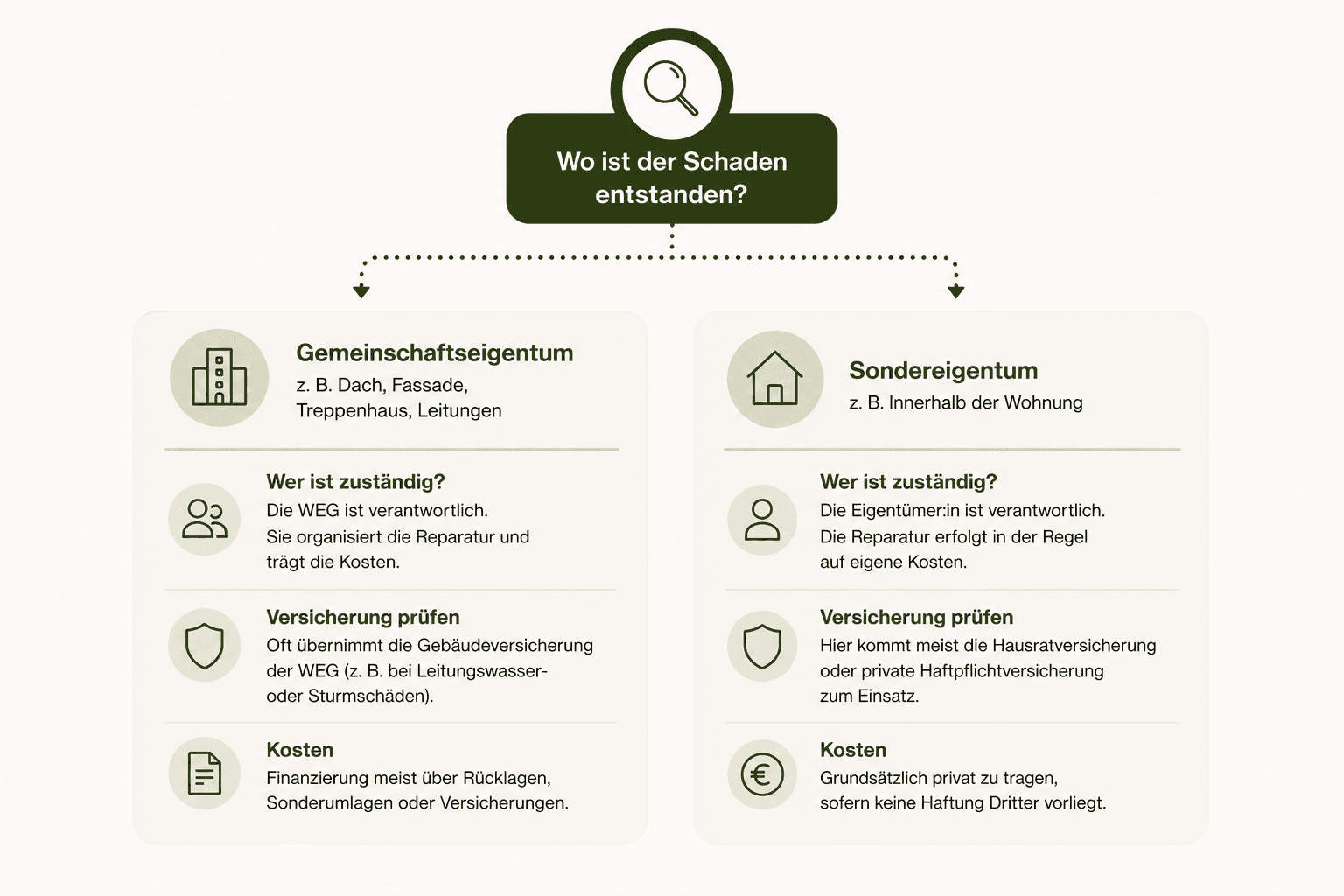
Responsibility changes depending on whether the damage occurred in the communal or private property.
This means that if damage occurs to communal property, the HOA must generally arrange for the damage to be assessed and repaired. However, this does not automatically mean that the HOA is liable to cover any subsequent damage to private property, meaning the flats themselves.
Difference between repair costs and damages
When dealing with damage in a HOA, two distinct questions often get blurred in day-to-day life: who has to repair the actual damage? And is anyone additionally liable for any consequential damage?
Not every necessary repair automatically means that you as an owner have a claim for damages. It is exactly this distinction that regularly causes uncertainty within many HOAs.
It is therefore important to separate the issues into two levels:
1. Who has to organise and pay for the repair?
The HOA is usually responsible for damage to communal property. The cost is often covered by maintenance reserves, special levies, or building insurance.
2. Who is liable for consequential damage?
The situation is different if damage to communal property also causes damage to private property, meaning inside individual flats. The question then arises whether the HOA, the building management, an owner, or another party can be held responsible for this consequential damage and ordered to pay compensation.
This usually depends on whether necessary actions were negligently delayed, duties were breached, or visible damage was ignored. A simple defect in the communal property, however, does not automatically lead to a claim for damages.[3]
This distinction causes uncertainty in many HOAs. The following five case studies from daily building management help to clarify the situation.
Example 1: water damage from a communal pipe
A burst pipe affects several flats. Water leaks out, ceilings or walls are damaged, and several parties suddenly have to react. If the affected pipe is part of the communal property, the HOA must organise its repair.
The building insurance is then contacted to cover the repair. Water damage from mains pipes is one of the classic cases where the HOA’s buildings insurance plays a key role.[4]
The question of who pays for damage inside individual flats is separate. Depending on the cause, insurance policy, and fault, buildings insurance, contents insurance, or, in individual cases, claims for damages may apply.
Important for owners: document the damage immediately, report it to the management team, and clarify whether communal property, private property, or both are affected.
Example 2: damage to the roof
A leaking roof can quickly affect several flats. Moisture gets in, walls or ceilings are damaged, and people start asking why the issue was not spotted sooner.
Especially with roof damage, quick action is vital to avoid major consequential damage.
The roof is generally part of the communal property. The HOA must therefore organise and finance the necessary repairs. If individual flats are also damaged by the leaking roof, potential liability depends on whether the defect was noticeable and whether the community or management negligently delayed taking action.[3]
Not every leak through the roof means the HOA is automatically liable for all damage to private property. The determining factor is whether duties were breached and if this breach actually caused the damage.
Important for owners: report damp damage early and document it in writing. A clear timeline is incredibly helpful for roof leaks: when was the leak noticed? When was it reported? What action was taken next?
Example 3: damage in the stairwell
The stairwell is generally communal property. If damage occurs there – to walls, flooring, handrails, or doors – the first step is to clarify what caused it.
If the damage is due to normal wear and tear or aging, the HOA is responsible. It then becomes a matter of maintaining or repairing the communal property.
It is a different story if a specific person caused the damage. Anyone who intentionally or negligently damages someone else's property can be held liable for damages.[5] In a HOA, this might apply if the stairwell is damaged during a move or if a tenant causes damage to communal property.
Important for owners: not all damage in the stairwell is automatically a community issue when it comes to splitting costs. If there is a clear culprit, the damage should be documented and reported to the management team.
Example 4: damage to the facade
Cracks, damp, or damaged plaster on the facade usually affect the communal property. The HOA must arrange for an assessment to find out what caused the damage and what needs to be done.
Facade damage is a prime example of why regular maintenance is so important. If a visible defect is ignored for a long time, it can lead to much larger issues. The HOA is fundamentally responsible for maintaining the communal property.[2] In this case, that means repairing the facade promptly once damage is discovered.
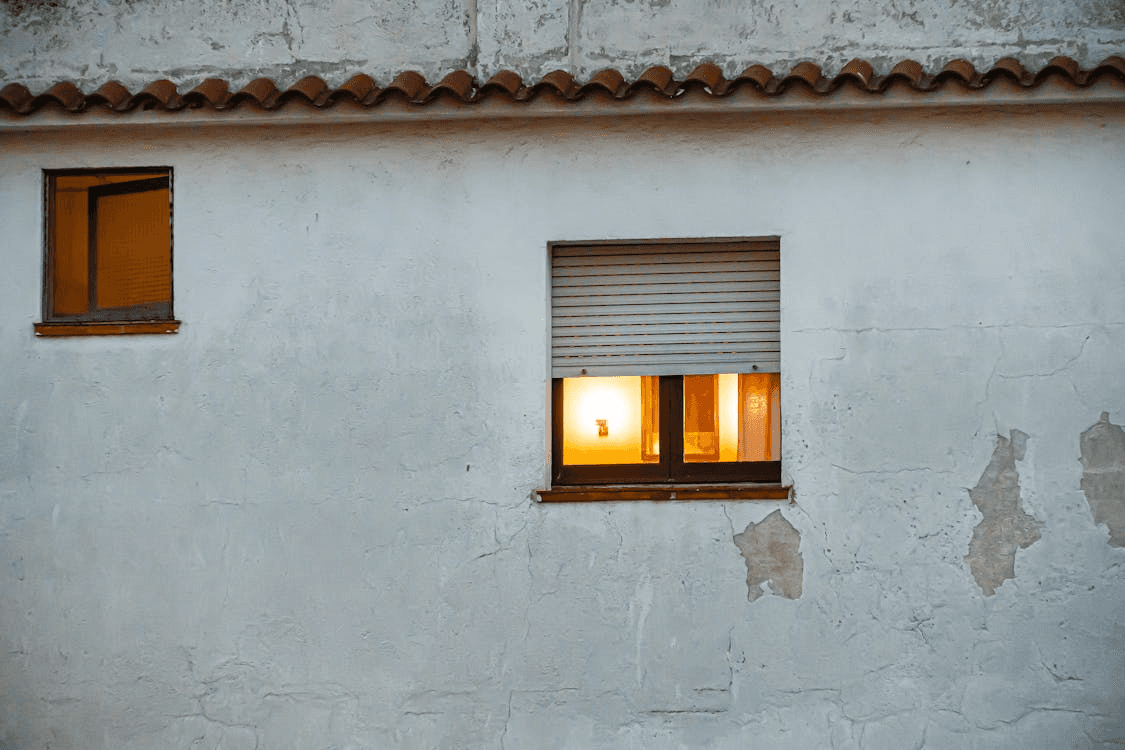
Just like roof damage, repairs to the facade should be ordered as quickly as possible before major damage and costs build up.
Things get more complicated if the damage was caused by an individual owner. This can happen, for example, due to unauthorised structural alterations or improper DIY work. The liability of the person responsible may then need to be assessed on a case-by-case basis.
Important for owners: with facade damage, you should look beyond the visible spot. It often requires a professional survey to properly understand the cause, scale, and necessary repairs.
Example 5: damage caused by work inside a flat
An owner has work carried out inside their own flat. During the work, a communal pipe is damaged or other damage is caused to the communal property.
In these cases, liability depends on who caused the damage and whether legal regulations, agreements, or resolutions were followed. Property owners are obliged to adhere to these and to avoid causing any unnecessary disadvantage to other owners.[6]
If communal property is damaged by work inside a private flat, the owner who ordered the work or the contractor they hired may be held responsible.
Important for owners: before starting major work in your flat, you should always check whether communal property could be affected. Pipes, load-bearing elements, or external parts of the building are rarely a purely private matter.
What owners should do in the event of damage
When damage occurs to communal property, a clear assessment is key. If you talk about liability too early, you often miss the more important first steps.
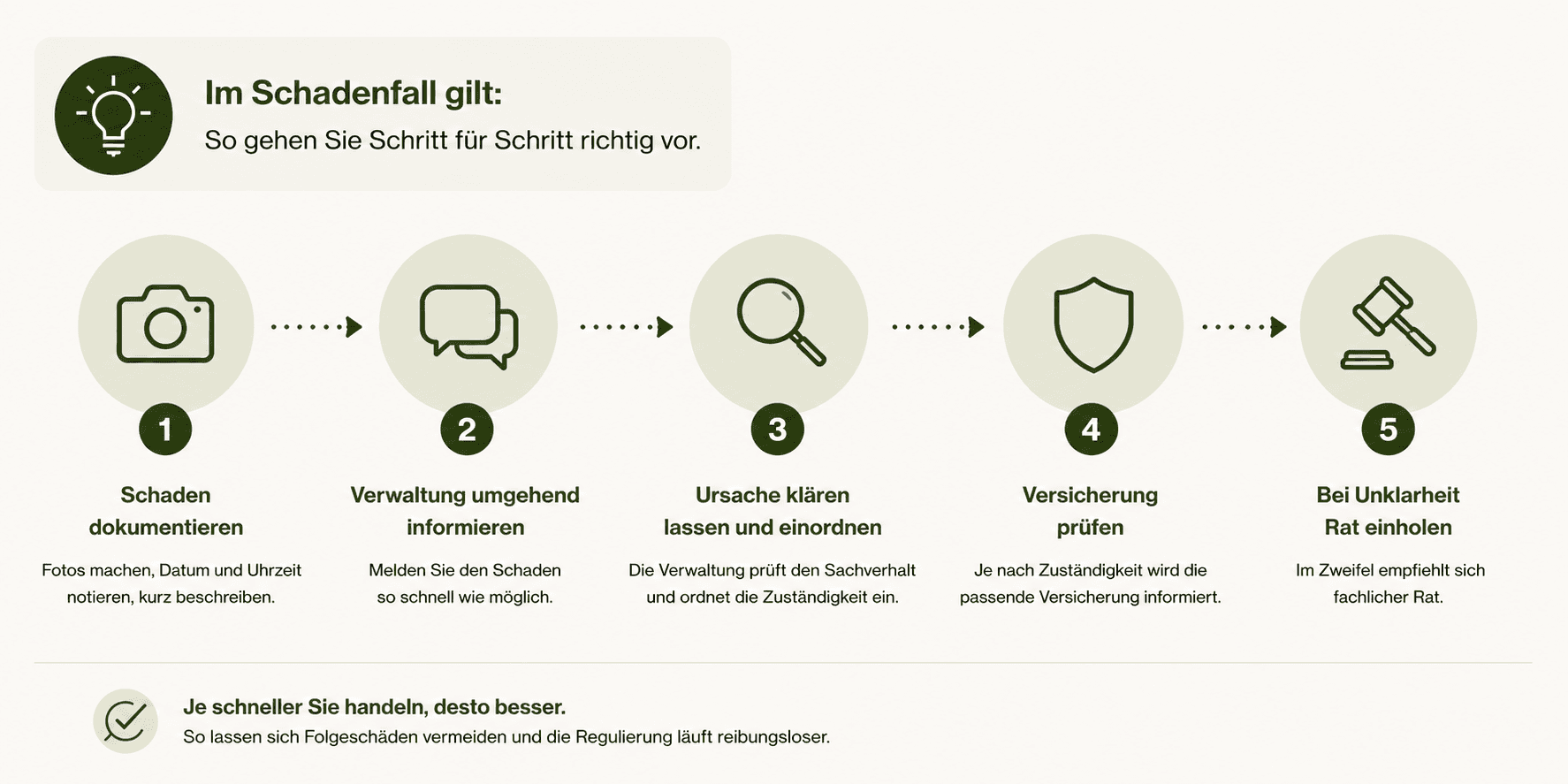
In the event of damage, a clear process is everything.
An overview of the most common cases
Damage | Typical classification | Who usually handles it? |
|---|---|---|
Burst pipe on a communal line | Communal property, often an insurance matter | Management / HOA |
Damage in the stairwell | Communal property or individual liability | Management / person responsible where applicable |
Facade damage | Communal property | Management / HOA / person responsible where applicable |
Leaking roof | Communal property | Management / HOA |
Damage from work in a flat | Private property, communal property, or personal liability | Owner / management / specialist contractor where applicable |
Good management provides clarity when damage occurs
Damage in a HOA cannot always be categorised immediately. That is exactly why you need building management that quickly assesses who is responsible and what steps are necessary.
At Theo, we know how important expert assessment is when damage occurs. For us, good HOA management means more than just passing on damage reports; it means finding the cause, clearly identifying responsibilities, and guiding owners through the process in plain language.
Sources
[1] Federal Ministry of Justice. (n.d.). German Condominium Act Section 18 Administration and Use. Gesetze im Internet. https://www.gesetze-im-internet.de/woeigg/__18.html
[2] Federal Ministry of Justice. (n.d.). German Condominium Act Section 19 Regulation of Administration and Use by Resolution. Gesetze im Internet. https://www.gesetze-im-internet.de/woeigg/__19.html
[3] Zeller & Partner Rechtsanwälte. (2025, 8 January). Practical case: Liability issues for damage in the homeowners' association. Zeller & Partner Rechtsanwälte. https://www.zeller-partner.de/post/praxisfall-haftungsfragen-bei-sch%C3%A4den-in-der-eigent%C3%BCmergemeinschaft-weg
[4] Dr. Leutloff, Thiel & Partner. (2023, 17 March). Homeowners' association: Mains water damage. https://drltp.com/video/Wohnungseigent%C3%BCmergemeinschaft-Leitungswasserschaden.pdf
[5] Federal Ministry of Justice. (n.d.). German Civil Code Section 823 Duty to compensate for damage. Gesetze im Internet. https://www.gesetze-im-internet.de/bgb/__823.html
[6] Federal Ministry of Justice. (n.d.). German Condominium Act Section 14 Duties of the Condominium Owner. Gesetze im Internet. https://www.gesetze-im-internet.de/woeigg/__14.html
Find out why more and more people are switching to Theo.
Similar items
General
Insights and updates
Hallo theo is now Theo
hallo theo is now Theo. Three years ago, we started with a clear goal: to make property management reliable, straightforward and personal. That remains the same. What is changing is our brand. We have a new name, a new look and a new website. Your local team in Berlin, Frankfurt, Munich, Stuttgart and Wildeshausen is still here. Your contacts, phone numbers and email addresses also remain the same.
Homeowners' association
Insights and updates
New partnership: Theo and BSK Immobilien – estate agents for Berliner Sparkasse
As a property owner, you deal with a wide range of questions. Sometimes it is about daily management, sometimes a rental, selling a flat, or figuring out the current value of your property.
General
Market & outlook
New challenges demand new solutions: how property management needs to change
Property management is much more complex today than it was a few years ago. Owners expect fast replies, transparent processes and reliable contacts. At the same time, legal requirements are increasing, technical issues are becoming more demanding, and decisions within homeowners' associations must be properly documented and put into action.
Commercial
Security and value growth
Why property controlling determines your return.
The numbers look good, but too little is happening in the building itself? Maintenance is not managed consistently, measures are delayed, and technical issues are treated as an afterthought?