Property management is much more complex today than it was just a few years ago. Owners expect quick feedback, transparent processes and reliable contacts. At the same time, legal requirements are increasing, technical topics are becoming more demanding and decisions within homeowner associations must be properly documented and implemented.
This is particularly clear in legal and technical developments. With the reform of the Building Energy Act, new requirements around heating, energy efficiency and energy-related measures in buildings have been introduced progressively since the beginning of 2024 [1,2]. For property managers, this means significantly more coordination effort between owners, service providers, technical trades and long-term measure planning. Today, management no longer just has to organise, but increasingly has to accompany technical decisions and put complex information into understandable context.
The organisation within homeowner associations is also changing. For example, since October 2024, homeowner associations can decide to hold purely virtual owner meetings under certain conditions [3]. This simultaneously increases expectations for digital communication, rapid information provision and comprehensible documentation. Today, topics must not only be decided, but also be transparently traceable for owners at any time.

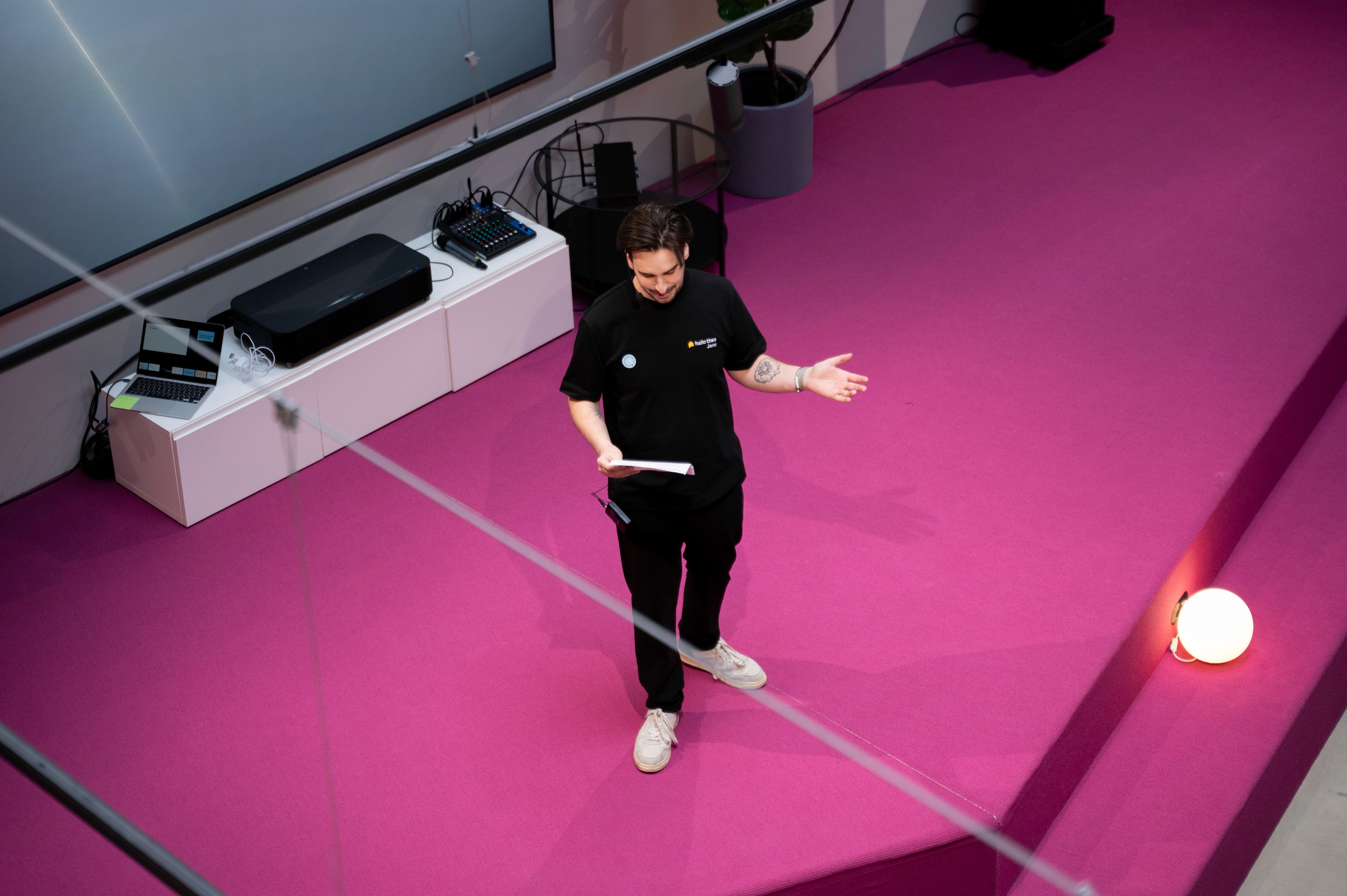
Transparency is the top priority, not only for founder and managing director Jona Schaeffer, but for all employees at Theo.
In addition, the industry is under increasing pressure. According to the EBZ Business School, more than 73 per cent of property and homeowner association managers see the shortage of skilled workers as their greatest challenge [4]. At the same time, only around 40 per cent of companies have a clearly defined digitalisation strategy [4]. This exacerbates a problem that many owners are already feeling today: more and more tasks are hitting management structures that were originally never built for this complexity.
Many administrations therefore operate permanently in reaction mode. Information is scattered across individual email inboxes, knowledge depends on specific people and operational topics are organised in parallel instead of being managed centrally. As long as little happens at the same time, this often still works. However, as soon as technical measures, legal requirements and owner communication run in parallel, delays, uncertainties and additional effort arise.
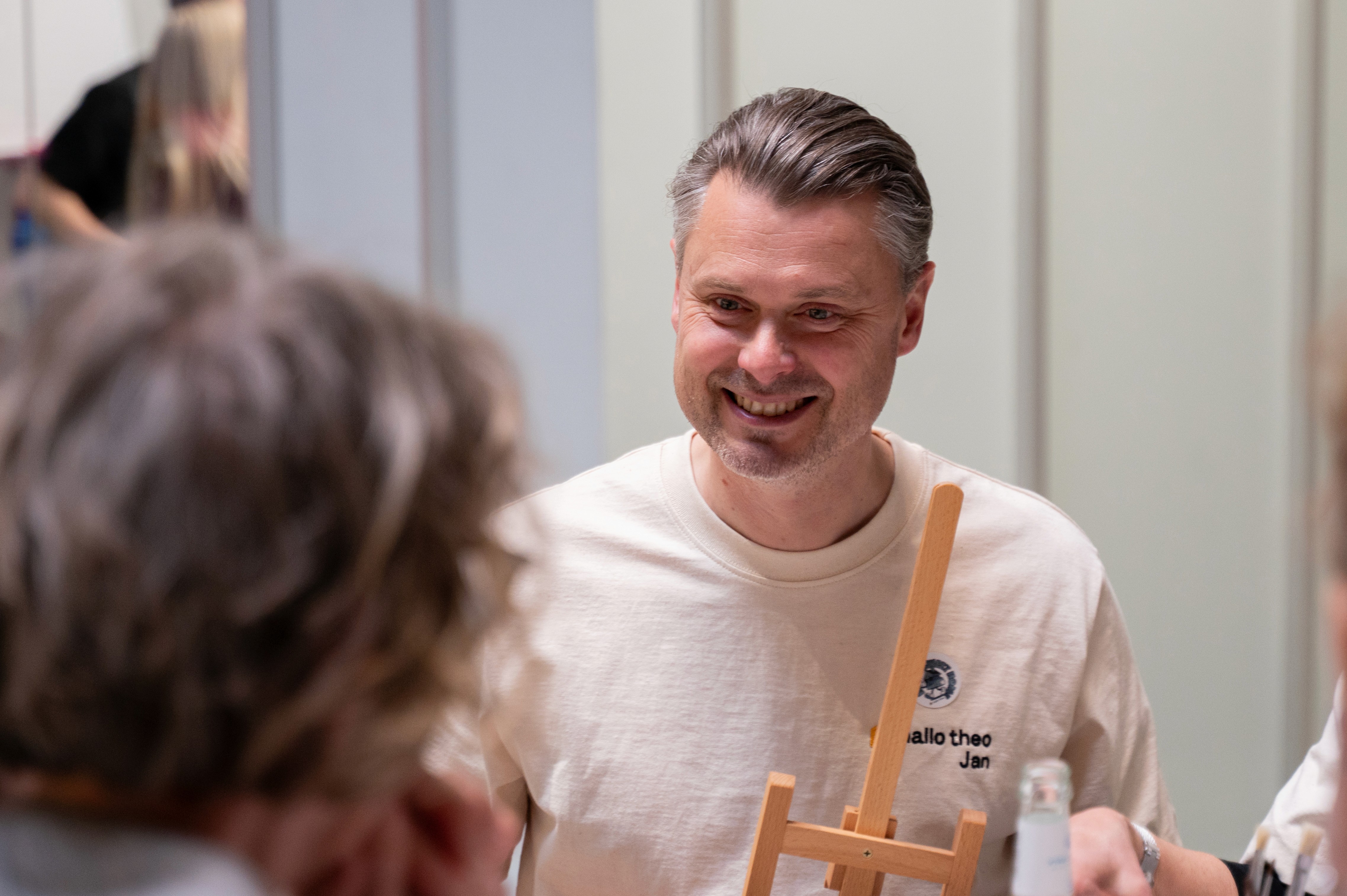
Managing Director Jan Schmälzle has been experiencing the changes in the industry himself for many years. With Theo, he aims to organise modern management more efficiently without losing sight of personal contact.
This is precisely why we are currently seeing a change, not just in the work of property managers. The question of how management needs to be organised in the first place is changing.
Old management structures reach their limits
The real challenge today is rarely in individual tasks. Most managers generally know what needs to be done. It becomes more difficult when more and more topics have to be coordinated at the same time.
For example, a technical measure is decided. Quotes must be obtained, service providers coordinated, owners informed and deadlines met. At the same time, queries about the annual statement, damage to common property or votes within the homeowner association are ongoing.
If information is not centrally available or responsibilities blur, even simple topics quickly lose clarity. However, this is not a problem of individual employees. Many teams have been working at their limits for a long time. The actual problem is often organisational structures that date back to a time when administration was still analogue and much simpler.
The VDIV therefore currently describes the industry as a market between growth, transformation and a shortage of skilled workers [5]. Larger administrations are increasingly relying on digitalisation, efficiency increases and more professional coordination, because classic ways of working are finding it harder to meet the growing demands.
Digitalisation alone does not solve the problem
Digitalisation is often described in the industry as a quick fix. In reality, however, many problems do not arise because too little software is used. Rather, they arise because information, responsibilities and communication do not come together properly. Poor administration does not automatically become better digitally.
The decisive factor is how technology is used. Systems should not replace people, but relieve them of work. Repetitive tasks, documentation or information management in particular can be organised much more efficiently today than just a few years ago. And not just thanks to new software, but especially through the use of Artificial Intelligence (AI).
It is no wonder that AI is currently fundamentally changing the industry. It can structure information even faster, support processes and significantly reduce administrative effort. This means that AI can help counteract the increased shortage of skilled workers, whilst also freeing up more time for what is truly important: personal support and reliable guidance in the daily life of owners.
The decisive question is therefore no longer whether management is becoming more digital. Rather, it is which technologies are used where and how. Because one thing is certain: new solutions can give the industry a boost again and sustainably improve owner satisfaction.
Interview: how Theo thinks about management today
How is property management actually changing right now? And why are many classic management structures increasingly reaching their limits?
In this interview, Jona Schaeffer, founder and CEO of Theo, and Jan Schmälzle, Managing Director of Theo, explain which challenges owners are feeling particularly strongly today, why digitalisation alone is not enough, and how modern management must be organised in future.
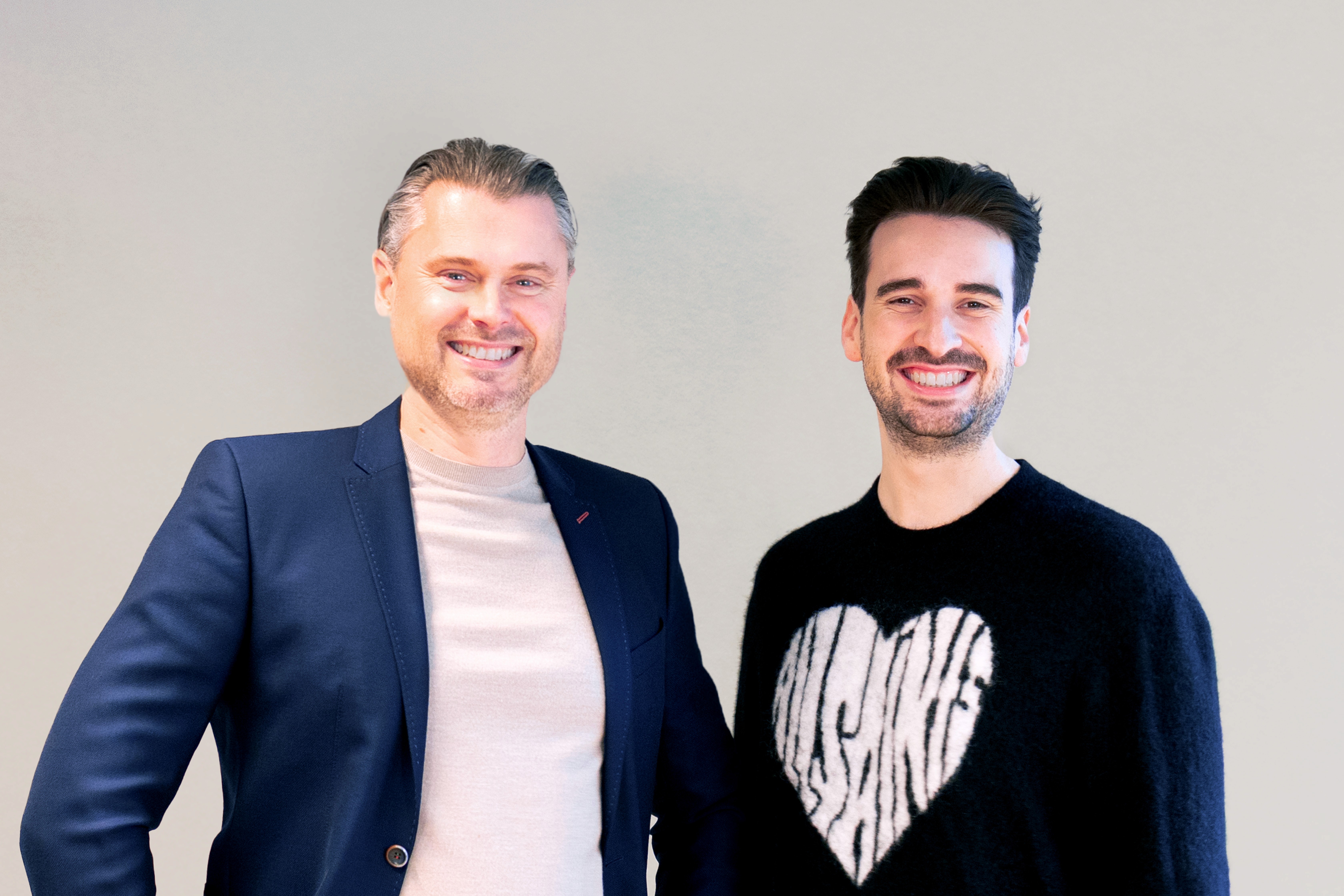
Property management is becoming more complex. Jan Schmälzle and Jona Schaeffer explain why good organisation is more important today than ever.
What has changed the most in property management in recent years?
Jan Schmälzle: The number of topics that need to be accompanied at the same time. Previously, it was more about classic administrative tasks. Today, technical requirements, legal regulations and owner communication permanently interlock. This has made management significantly more demanding.
Jona Schaeffer: And at the same time, expectations are rising. Owners today want to be able to understand what is happening. They expect transparency, quick feedback and management that actively guides topics instead of just reacting to them.
Where do owners particularly notice the problems of old management structures?
Jan Schmälzle: Mostly in the small things. Queries take too long. Documents have to be requested multiple times. Measures are decided, but later there is no overview of the current status. That is exactly where trust is built in everyday life. Or frustration.
Jona Schaeffer: Many administrations also still depend heavily on individuals. Knowledge is often stuck in individual heads instead of being cleanly available as information. That might work with low complexity. But not in an environment where topics are constantly running in parallel.
What role does technical management play today?
Jan Schmälzle: A much larger one than before. Technical management today directly decides on costs, value preservation and quality in daily life. If maintenance is postponed or measures are started too late, owners often only notice when small issues suddenly become larger and usually much more expensive problems.
Jona Schaeffer: It is therefore important not to see properties as static assets. They are permanently evolving. That is exactly why classic management alone is often no longer enough today. Management must guide technical topics in the long term and identify developments early on.
Why does Theo deal so intensively with digitalisation and AI?
Jona Schaeffer: Because we are convinced that modern technology can massively improve management. AI will not replace property management. But it can reduce repetitive tasks, make information available faster and relieve teams operationally.
This creates more time for personal support, better accessibility and real responsibility towards owners.
Jan Schmälzle: In the end, it does not matter to owners which system is running in the background. They directly notice whether requests are processed quickly or topics are accompanied reliably.
What does Theo do differently?
Jan Schmälzle: Our aim is for our management to create real relief instead of additional effort. For too long, owners had to chase after their management and track everything. We organise Theo so that property management simply runs. Right in the background.
Jona Schaeffer: Exactly. And to guarantee this claim, our approach combines years of management experience with deep real estate knowledge and modern system development. With this combination, we build management so that it remains scalable in the long term, allowing us to offer our service at more and more locations, whilst owners still experience personal support.
What needs to change in the industry in the long term?
Jan Schmälzle: Management must become more predictable again. Less improvising, more overview and better traceability in daily life. This relieves owners and at the same time the teams within the administration.
Jona Schaeffer: The industry must stop seeing digitalisation only as a software topic. Good technology creates space for better support, better communication and more quality in daily life. On all sides.
Modern management needs more than operational organisation
The demands on property management will continue to rise in the coming years. What matters will therefore not be who manages the most units or who uses the latest technology. It is about who organises complexity in such a way that owners continue to experience reliability despite all the changes in the market.
Because the future of property management does not lie in the administration itself. It lies in its Portal organisation.
Sources
[1] German Federal Government. (2024). Act on Renewable Heating. German Federal Government. https://www.bundesregierung.de/breg-de/aktuelles/neues-gebaeudeenergiegesetz-2184942
[2] Federal Ministry for Housing, Urban Development and Building. (n.d.). Building Energy Act. BMWSB. https://www.bmwsb.bund.de/DE/bauen/innovation-klimaschutz/gebaeudeenergiegesetz/gebaeudeenergiegesetz_node.html
[3] VDIV Germany. (2024). Virtual Owners Meeting. VDIV Germany. https://vdiv.de/virtuelle-eigentuemerversammlung
[4] EBZ Business School. (2025, 22 April). More than a third of property and HOA managers without a digital strategy: shortage of skilled workers demands action. EBZ Business School. https://www.ebz-business-school.de/presse/detail/beitrag/mehr-als-ein-drittel-der-haus-und-weg-verwalter-ohne-digitale-strategie-fachkraeftemangel-fordert-handlungsbedarf.html
[5] VDIV Germany. (2025, 12 September). VDIV Germany publishes 2025 industry barometer: real estate management between growth, transformation and shortage of skilled workers. VDIV Germany. https://vdiv.de/presse/details/vdiv-deutschland-veroeffentlicht-branchenbarometer-2025-immobilienverwaltungen-zwischen-wachstum-transformation-und-fachkraeftemangel
Find out why more and more people are switching to Theo.
Similar items
General
Insights and updates
Hallo theo is now Theo
hallo theo is now Theo. Three years ago, we started with a clear goal: to make property management reliable, straightforward and personal. That remains the same. What is changing is our brand. We have a new name, a new look and a new website. Your local team in Berlin, Frankfurt, Munich, Stuttgart and Wildeshausen is still here. Your contacts, phone numbers and email addresses also remain the same.
Homeowners' association
Insights and updates
New partnership: Theo and BSK Immobilien – estate agents for Berliner Sparkasse
As a property owner, you deal with a wide range of questions. Sometimes it is about daily management, sometimes a rental, selling a flat, or figuring out the current value of your property.
Commercial
Security and value growth
Why property controlling determines your return.
The numbers look good, but too little is happening in the building itself? Maintenance is not managed consistently, measures are delayed, and technical issues are treated as an afterthought?
Rented property
Knowledge & advice
Your service charge statement in three simple steps.
For many property owners, service charge statements are a task that is easily put off. It is not because individual items are hard to understand. It is simply that many questions tend to come up at the same time: which costs can you actually pass on? What documents do you need? And how do you make sure the statement is complete and correct?